

Jobs and Workforce Development
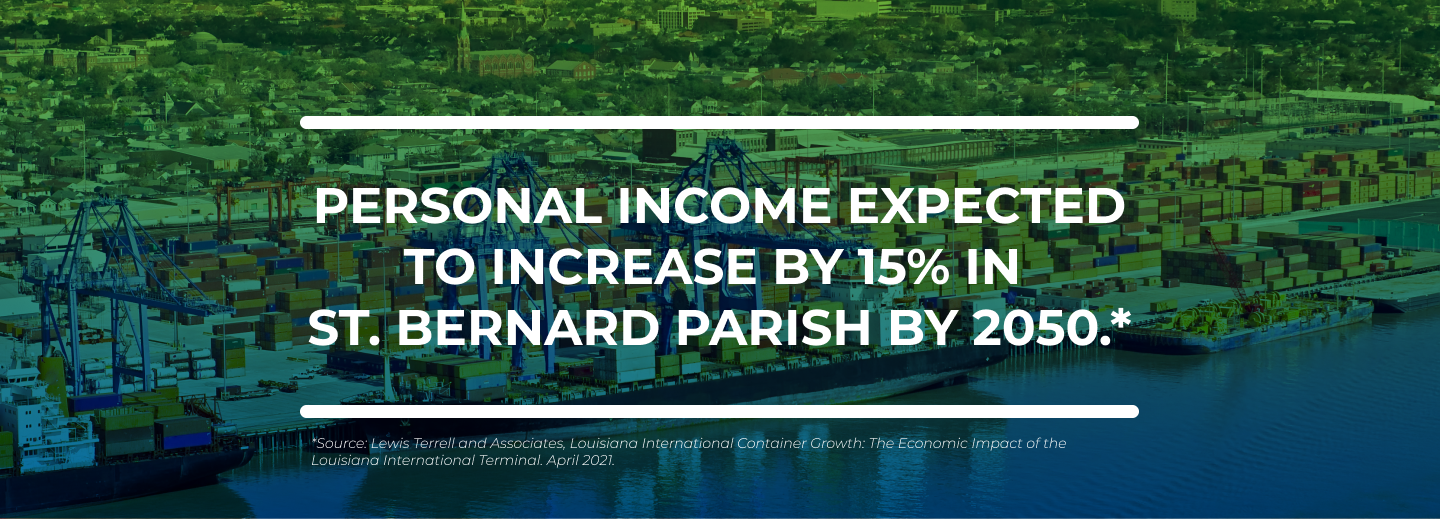
The Louisiana International Terminal will create jobs for St. Bernard Parish and the state. As business increases over time, more family-supporting jobs will be available both on and off the terminal. A recent economic study shows the project will act as an economic driver for generations.
Job Creation Over Time
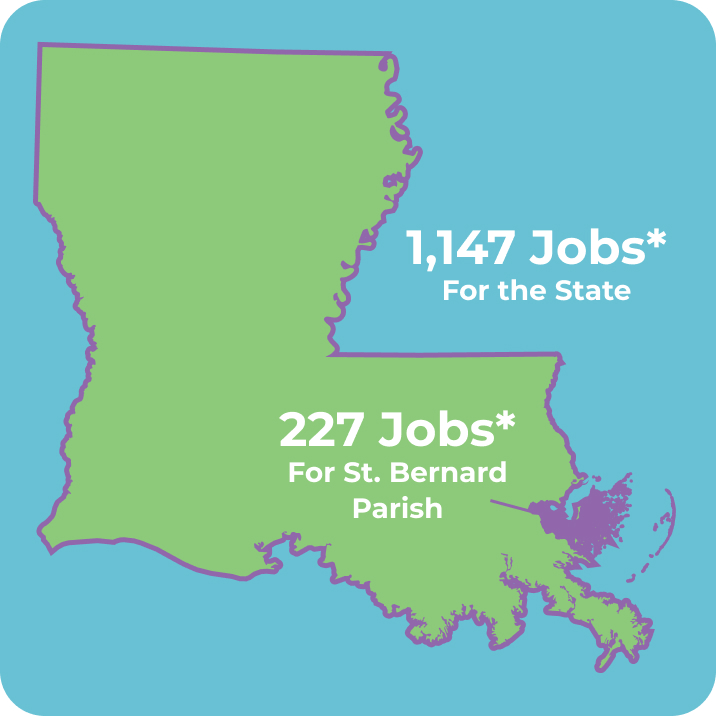
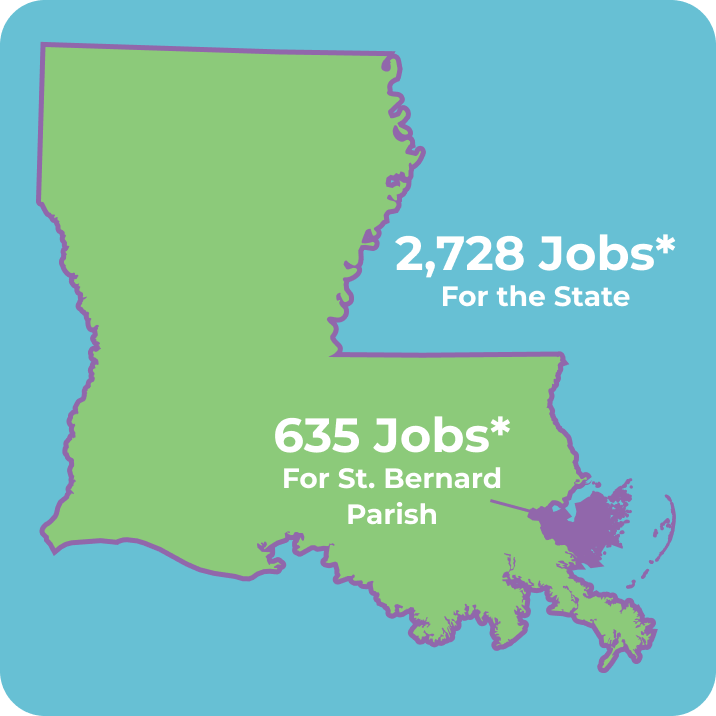
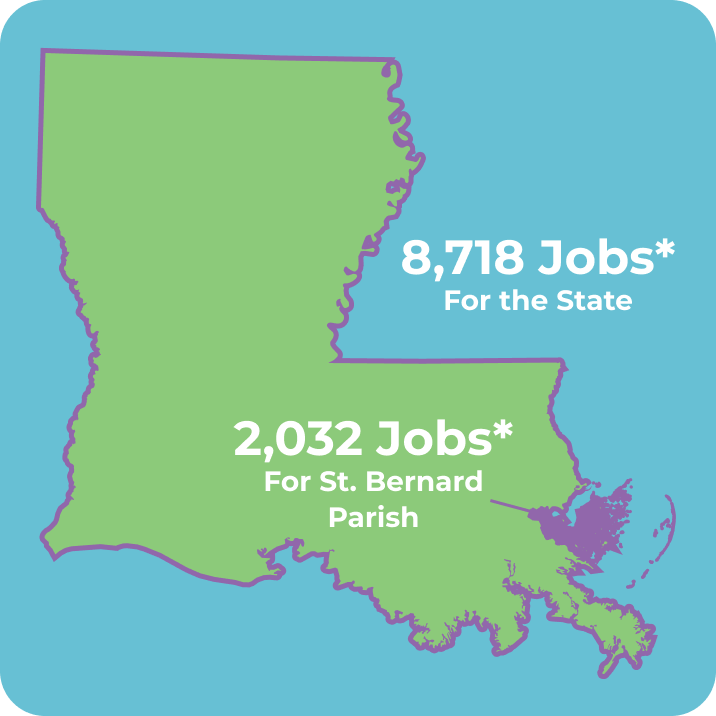
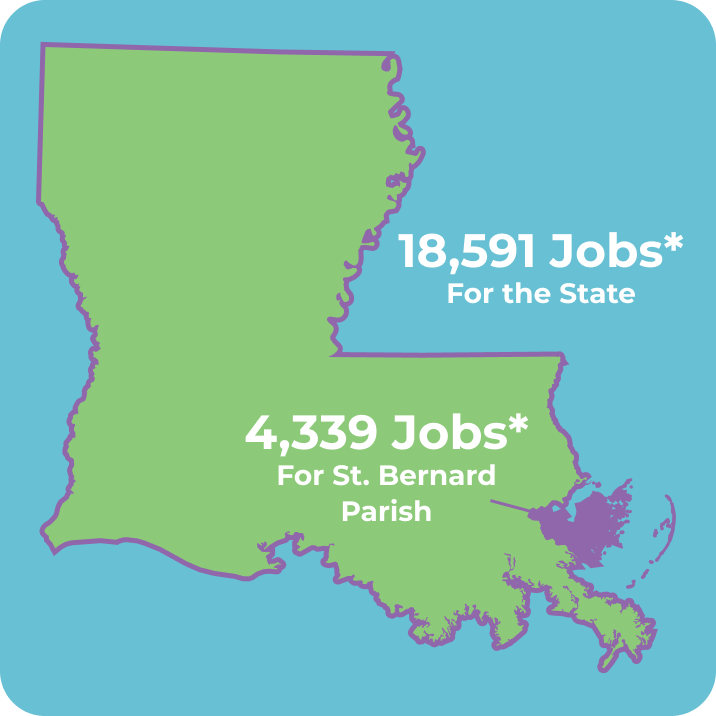
9,552 existing jobs lost
If the proposed terminal is not built, Louisiana won't be able to handle the larger ships that are becoming more common. International shipping companies will take their business to competing ports in Houston and Mobile. Distributors and warehouses will follow. As a result, nearly 10,000 jobs existing in Louisiana today could be lost in just 10 years (2033).
*Source: Lewis Terrell and Associates, No LIT Loss Summary. October 2022.
Creating Jobs and Opportunities
- Construction workers
- Dock Workers
- Terminal managers
- Logistics coordinators
- Clerks and inspectors
- Customs agents
- Maintenance technicians
- Equipment operators
- Information technology professionals
- Business and financial operations staff
- Security staff
- Manufacturing
- Rail, water, & truck transportation
- Healthcare
- Retail
- Warehouse & storage
- Restaurants
- Wholesale trade
To help locals apply for jobs, the Port is working on workforce development and job training concepts.
- The Port of New Orleans is partnering with:
- Louisiana Economic Development (LED) Fast Start
- The International Longshoremen's Association
- Local Community Colleges
- Regional and Local Economic Development Organizations

Our partner Kiewit has employment opportunities company-wide that you can apply for now.
Recent Updates
U.S. Army Corps of Engineers Grants Federal Permit for Louisiana International Terminal, Authorizing Construction of America's Next Great Deepwater Port
The U.S. Army Corps of Engineers has granted the federal permit authorizing construction of the Louisiana International Terminal (LIT), clearing the way for the nation's only new greenfield container port currently under development — a project positioned to redefine Gulf Coast trade capacity, strengthen the U.S. supply chain, and accelerate American manufacturing and commerce.
Louisiana Department of Transportation and Development Advances St. Bernard Transportation Corridor with Federal Support Secured by Sen. John Kennedy
The Louisiana Department of Transportation and Development (DOTD) today announced that Phase 1 of the St. Bernard Transportation Corridor is moving forward through a cooperative partnership with the Port of New Orleans and St. Bernard Parish, backed by significant federal funding secured by U.S. Sen. John Kennedy (R-LA).
Port of New Orleans Becomes First New U.S. Container Terminal Project and First Louisiana Project to Register with Envision
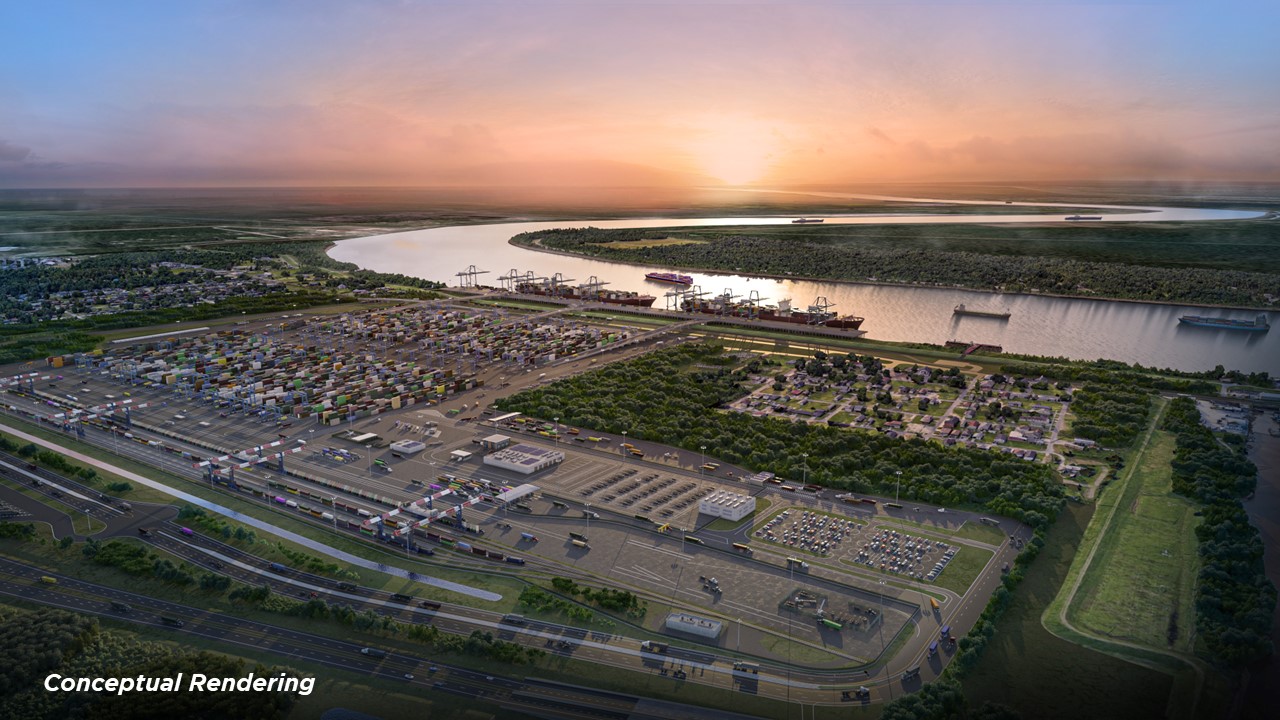
The Port of New Orleans (Port NOLA) today announced that the Louisiana International Terminal (LIT) project is officially registered with the Envision Sustainable Infrastructure Framework, marking a historic first for both Louisiana and the United States. LIT is the first new container terminal in the country and the first project in Louisiana to register with Envision, underscoring Port NOLA’s commitment to building infrastructure that prioritizes environmental stewardship, social responsibility, and long-term economic resilience.