

Federal Permitting Process
The Port of New Orleans is conducting a detailed impact analysis for the proposed terminal, which is required under the National Environmental Policy Act (NEPA). Port NOLA will share the results of the analyses with the Army Corps of Engineers for consideration in its permitting decision.
Environmental Review Process
What is Involved?
NEPA requires federal agencies like the Army Corps of Engineers to consider how a project could impact the natural and human environments before issuing permits for construction. The Army Corps of Engineers has asked Port NOLA to move forward with the environmental review process. Port NOLA hired an outside consultant to conduct a range of impact analyses that cover topics like traffic, quality of life near the terminal, natural habitat and wildlife, the economy, and more.
Port NOLA shared these studies with the U.S. Army Corps of Engineers (USACE) as part of the federal permitting process.
Key Milestones
-
1. Federal Permit Application Filed
The Port of New Orleans submitted its permit application for the proposed project to the Army Corps of Engineers. This began the federal permitting process.
December 2021

-
2. Public Notices Issued
The Army Corps of Engineers issued two public notices between January and April 2022; an additional one was issued in December 2024. Comments collected during these periods help the Army Corps of Engineers decide the type of report to require.
2022 & 2024
-
3. Environmental Study Process
Studies are conducted to gather data on the project's impacts on both human and natural environments for submission to Army Corps of Engineers.
Ongoing
(Began 2023, Expected to be completed in 2026*)
*Timeline subject to change -
5. Permit Decision
The Army Corps of Engineers will decide whether to issue permit.
Anticipated 2026

-
7. Permits Issued
The Army Corps of Engineers issues the required permits for the project as modified during the review process.
Construction begins. Expected in 2026*.
*Timeline subject to change.
Contact the Army Corps of Engineers
If you have questions about this project's docket, contact the Army Corps of Engineers.
Reference Permit Number MVN-2021-00270-EG

Required Permits
The Louisiana International Terminal will need federal permits because its proposed footprint overlaps with the Mississippi River, Mississippi River levee, and wetlands.
Section 404 of the Clean Water Act
A Wetlands permit is required since the project will be built where there are currently wetlands.
Section 10 of the Rivers and Harbors Act
A Navigable Waterways permit is required since the project will be built along the Mississippi River.
Section 408 of the Rivers and Harbors Act
A Civil Works Projects permit is required since the project will overlap with the Mississippi River Levee.
Recent Updates
U.S. Army Corps of Engineers Grants Federal Permit for Louisiana International Terminal, Authorizing Construction of America's Next Great Deepwater Port
The U.S. Army Corps of Engineers has granted the federal permit authorizing construction of the Louisiana International Terminal (LIT), clearing the way for the nation's only new greenfield container port currently under development — a project positioned to redefine Gulf Coast trade capacity, strengthen the U.S. supply chain, and accelerate American manufacturing and commerce.
Louisiana Department of Transportation and Development Advances St. Bernard Transportation Corridor with Federal Support Secured by Sen. John Kennedy
The Louisiana Department of Transportation and Development (DOTD) today announced that Phase 1 of the St. Bernard Transportation Corridor is moving forward through a cooperative partnership with the Port of New Orleans and St. Bernard Parish, backed by significant federal funding secured by U.S. Sen. John Kennedy (R-LA).
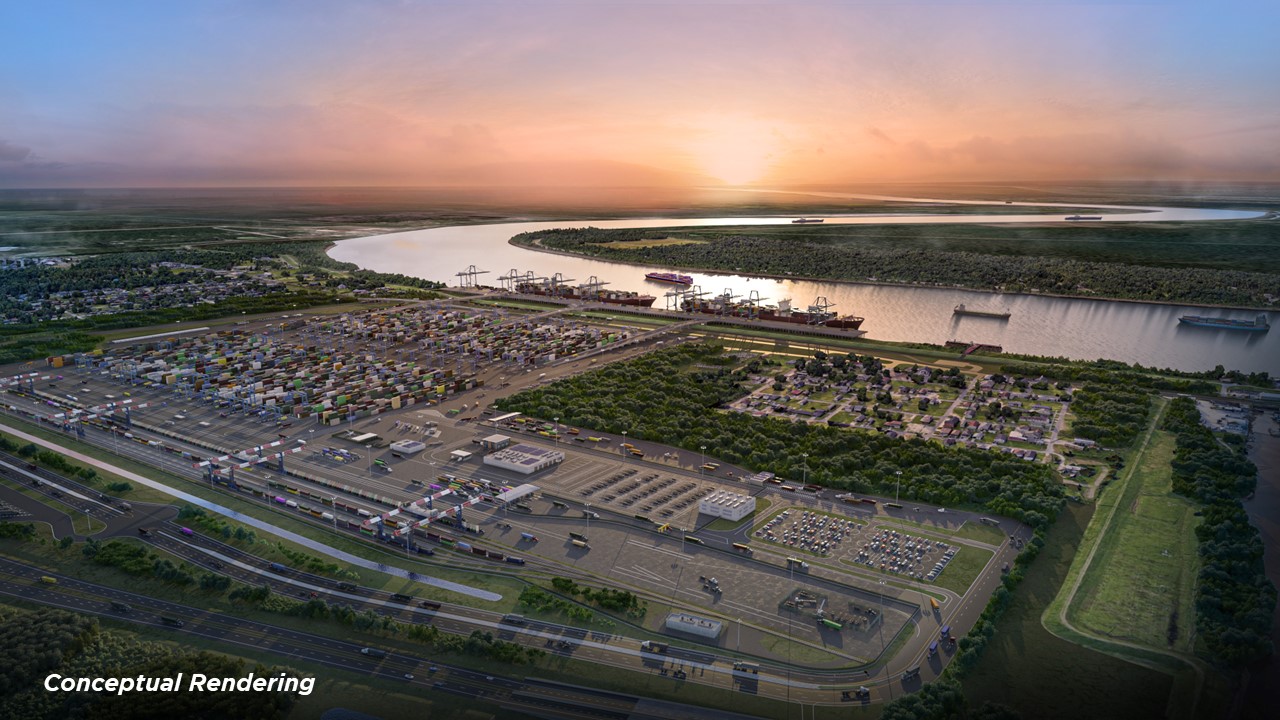
Port of New Orleans Becomes First New U.S. Container Terminal Project and First Louisiana Project to Register with Envision
The Port of New Orleans (Port NOLA) today announced that the Louisiana International Terminal (LIT) project is officially registered with the Envision Sustainable Infrastructure Framework, marking a historic first for both Louisiana and the United States. LIT is the first new container terminal in the country and the first project in Louisiana to register with Envision, underscoring Port NOLA’s commitment to building infrastructure that prioritizes environmental stewardship, social responsibility, and long-term economic resilience.